My name is Vaishnav Inabathula; a UX designer, analyst, and researcher, and I have a confession to make: I love analyzing and fixing complicated digital experiences.
As a recent graduate with an MS in Human Computer Interaction, I specialize in the Information Architecture of complex systems, and my passion lies at the intersection of Data Analytics and User Experience. I don’t just design 'screens'; I deconstruct complicated digital environments—like the AI-driven platforms I built at Cisco and One.IU—and turn them into quantifiably efficient tools.
My approach is rooted in the CORE framework:Collect messy data, Organize it into logical systems, Refine it through testing, and Execute prototypes that actually solve the problem. Whether I’m reducing search friction or auditing a global data network, my goal is to find the 'signal' in the noise.
Outside the lab: I’m making music, traveling, or hunting for the perfect pour-over. I take my bean-to-cup ratios as seriously as I take Data Integrity. (Fair warning: I am a proud Starbucks-free zone).
If you want to see how I bridge the gap between High-Stakes Data and Human-Centered Design, let’s chat.
Click the “Portfolio” section to check out my numerous projects, and the “Contact” page to reach out.
About Me

Project Highlights
Access IU & Ask IU Chatbot

Redesigned IU's campus app with AI chatbot and intuitive navigation, reducing resource search time by 40%. Presented to the Chancellor and university board.
Cisco AI Security

Designed a layered access control system for Cisco's AI that balances functionality with security, using competitive analysis to inform decisions that protect sensitive data while keeping AI useful. Led to a 20% increase in perceived reliability.
Sonic Alert
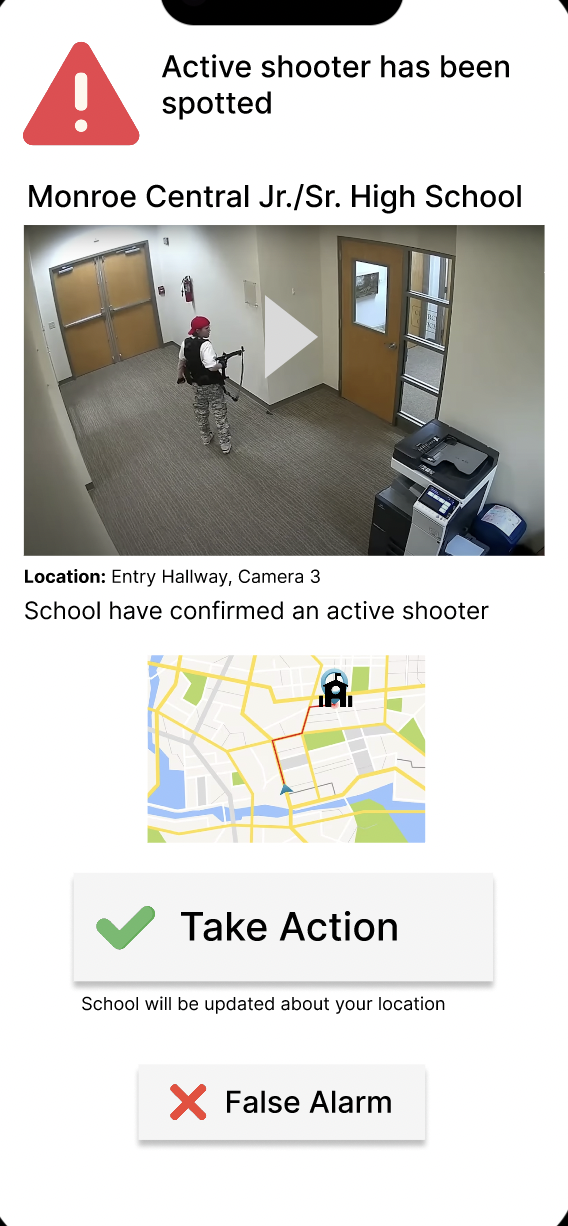
Created a gunshot detection and alert system for schools that integrates sound sensors with emergency response protocols for the national CHI Student Design Competition.
2.
Intentional Innovation
Don't just chase trends for the sake of it. Understand the purpose behind them and find a way to integrate them meaningfully into your design.
1.
Know Your Users
Great design starts with understanding the people it's built for. Without that, you're just guessing.
My Design Principles
3.
Simplicity Over Novelty
It's tempting to chase something new and exciting, but if a simpler solution already works for the user, there's no reason to overcomplicate it. Simple beats flashy every time.